Table Of Content
Gabion retaining walls offer a multitude of benefits that make them an attractive choice for various applications. Firstly, their construction using wire cages filled with rocks allows for excellent water drainage, minimizing hydrostatic pressure behind the wall. You can configure the baskets to make a gabion retaining wall, construct a privacy fence on your property, or simply incorporate (and perhaps even reuse) some natural stone into your home’s garden or yard. Gabion walls also offer a variety of industrial uses, including erosion control, temporary flood control, noise reduction, and filtering silt from water runoff. In residential settings, they are commonly used to create terraced gardens, prevent soil erosion in sloping landscapes, and define boundaries.
Drawbacks of Gabion Walls
Chimp sanctuary gets Shs350m facelift Monitor - Monitor
Chimp sanctuary gets Shs350m facelift Monitor.
Posted: Mon, 08 Nov 2021 08:00:00 GMT [source]
Understanding their impact on the environment can help you make informed decisions and create a green and sustainable landscape. Understanding the financial aspects of a gabion retaining wall project is crucial for effective planning and budgeting. By analyzing the cost factors involved, you can make informed decisions and ensure the successful completion of your project.
Victorian home seen on Nine's Postcards is an idyllic retreat made of gabion stone walls - Domain News
Victorian home seen on Nine's Postcards is an idyllic retreat made of gabion stone walls.
Posted: Fri, 27 Oct 2023 07:00:00 GMT [source]
The Purpose of Gabion Retaining Walls
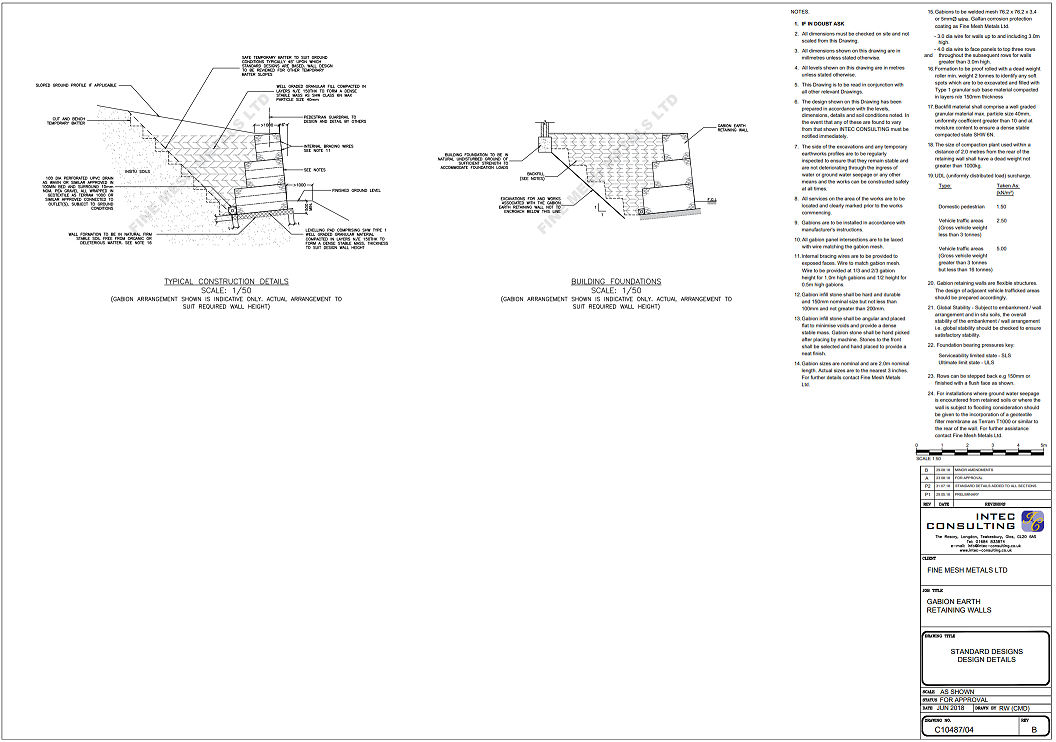
It is assumed that any building foundations on the retained side of the walls will be taken to such as level so as to ensure that no loads are transferred to the Gabions or backfill. The buildingfoundations must not rely on the Gabions or for support, and are outside the scope of simple designs for budget purposes. Various gauges and grades of wire mesh are available, but usually, they’re all galvanized. You can choose a thicker mesh for the bottom and a thinner mesh for the top, as we suggested before, but you can also choose the same thickness for the entire wall if you so desire. To ensure that the eccentricity is within the middle third of the base, its value must be less than one-sixth of the width of the gabion wall at base level. The conclusion was that the gabion wall wins hands down in a comparative match when considering both the climate impact of carbon emissions as well as the financial cost of construction.
Gabion Retaining Wall Design: Enhancing Functionality and Aesthetics
You’ll need to assemble the cages, which is relatively straightforward when purchased, but it can take a while if your project requires multiple gabions. That means there’s plenty of room for you to play with how tall you actually want the wall to be. You’ll need to know how tall or thick you want your wall to be before beginning your project, so you know how to construct it accordingly.
What are the factors I should consider for choosing between a slab on grade and basement?

This makes sure your wall will have a solid foundation and act as its anchor, as we mentioned before. Although concrete is durable, it has a life span and will show wear and tear over time. Gabion walls have higher wear and tear tolerance and can even grow stronger with time. A high water table might limit your options for a gabion wall too - unless outside and the water streaks and stains add to the aesthetic you're going for. The size of the stones can vary quite a bit from small to large, but the typical diameter you can expect to see is between 4 and 8 inches. From a design point of view, it is worth noting that gabions are not limited to stone.
The sound of flowing water can create a relaxing atmosphere and further enhance the overall aesthetic appeal. If you’re looking to build a retaining wall or privacy fence on your property or want to explore different landscaping ideas, a gabion wall may be the right solution for you. A gabion basket wall offers an inexpensive, yet effective, solution for water drainage and minimizing erosion. Gabion walls can be more sustainable than other hardscaping options if you reuse leftover materials or rocks from your property.
Sizes
Follow the steps outlined below to build a basic freestanding gabion wall on your property. Gabion baskets and the filler materials needed to build a gabion wall are easier to transport than larger stones and bricks. Even after building a gabion wall, you could later disassemble it and move it to a new location in your yard (or elsewhere) with little difficulty.
Water Drainage and Erosion Control
Moreover, gabion walls are highly versatile and can be used in both residential and commercial settings. Their natural appearance and texture make them blend seamlessly with the surrounding landscape, creating an aesthetically pleasing environment. Additionally, gabion walls are environmentally friendly, as they are made from natural materials and can support the growth of vegetation, promoting biodiversity. Either way, while the overall design of the shape is pretty uniform—square or rectangular—there are loads of ways to customize your gabion retaining wall without losing the structure’s integrity.
Each step would likely need to be poured individually, so that means 3 trips with concrete trucks and pump trucks, and that will add significantly to the cost. From an environmental aspect in terms of reducing the impact of the built environment on climate change, avoiding concrete is always a good thing. Unless you choose a carbon storage concrete option with a lowered carbon footprint as seen here. This will result in the internal diaphragms being placed perpendicular to the wall face and parallel to soil thrust. When gabion units are placed with the length dimension of the gabion unit running parallel with the length dimension of the wall the vertical seams shall be offset. Additionally, you’ll want the larger, thicker baskets on the bottom when building a gabion wall, followed by smaller, thinner baskets on top.
In computing the lateral pressure from the soil and any surcharge applied on the backfill, it is the coulomb method of calculating the coefficient of lateral pressure that is accepted. No liability is accepted where a typical section is used as a the basis for the final design. The drainage pipe is often encased in a filter sock, to prevent silts and clay clogging up the pipe.
Properly designed gabion retaining walls can effectively control erosion along waterways and protect the surrounding environment. The use of natural materials, such as rocks and galvanized steel wire, in gabion retaining walls reduces the environmental impact compared to alternative construction methods. These materials are readily available and can be sourced locally, minimizing transportation emissions.
Some are made with other materials such as oyster shells, wood, bark or recycled glass. The ZEB Pilot house in Norway is a good example incorporating gabion stone cages in home design where they are used to build both interior and exterior walls. If you want to build a particularly tall gabion wall or a stepped wall, the process described above will be more involved and you should consider hiring a contractor. Additional excavation may be needed for a stepped wall, and a backhoe may be required to fill the baskets of a taller gabion wall.
Gabion walls have been shown to have about a third of the carbon footprint of a concrete wall. Gabion walls are retaining walls built by stacking stone in a gabion cage or gabion basket that can serve many purposes but are most often used to create tiered or leveled ground in gardens. Gabion wall construction is relatively straightforward, and shorter walls and don’t require heavy equipment. Building a gabion wall is much more straightforward than trying to build a dry stone retaining wall, especially if you have limited construction experience. Fill material can vary from attractive stones to logs, industrial-grade stones, broken concrete, or even slag glass.

If you’re looking for a thinner accent wall for your garden, a gabion wall may not be the best choice. Soil and windblown or water-carried debris may end up in the crevices of the gabion walls. Gabion walls tend to have an industrial look, and it’s harder to make organic shapes with them.
For more assistance, reach out to our team of experts or learn more in our tips for building a retaining wall. Insulating the exterior of an existing foundation comes at a much higher cost simply due to the need to excavate, but it does however afford you the opportunity to do a membrane and drainage as well. To do the outside I would propose that you install a dimple drainage matt, along with a weeping tile drained to daylight if you can, and rigid insulation, rockwool or EPS . If you are doing the exterior then you can follow the procedures for exterior insulation here in page about the best way to insulate basements. They are also more frequently being seen installed in urban areas and parks as partition walls or even as outdoor furniture.


No comments:
Post a Comment